Tips for Backpackers Headed to New Zealand
So you’ve decided to experience the trip of a lifetime backpacking your way around New Zealand. You’ll need to get your visa sorted and plan out your trip. The summer months are a great time to visit with some glorious weather but you can also expect crowds and higher prices. The shoulder season from May to September can be colder but presents some other opportunities for backpackers to take advantage of - spectacular snow scenery, fewer tourists and cheaper rates. No matter what season you decide on you’ll need to pack suitable gear for your trip and do some research and planning on where you’re going to stay.
Backpacking Accommodation options – where to sleep
Having a place to stay is going to be one of your biggest costs, so no matter what your budget you need to consider the options available and find what’s best for you. If you’re lucky you might have someone to stay with but most travelers end up staying in a hostel or ‘backpackers’, sharing a dorm room. A hostel is a great place to meet up with like-minded people from all over the world, socialize and gather lots of information on where to go and what to do in New Zealand. Other options include hotels and motels, Airbnb, renting a room in a ‘flat’ for longer stays, finding accommodation in exchange for work, or buying a campervan to hit the road.
Camping in Tents
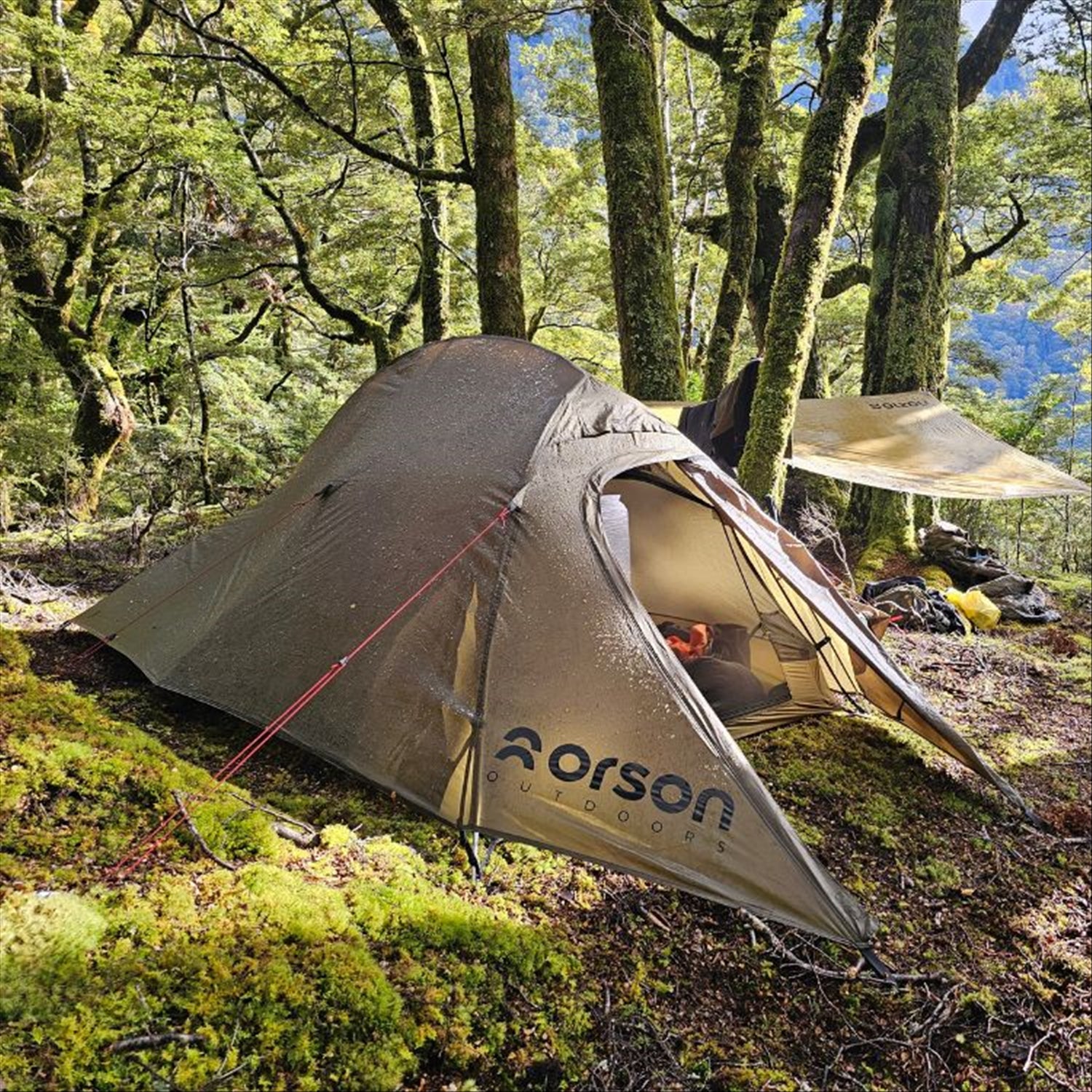
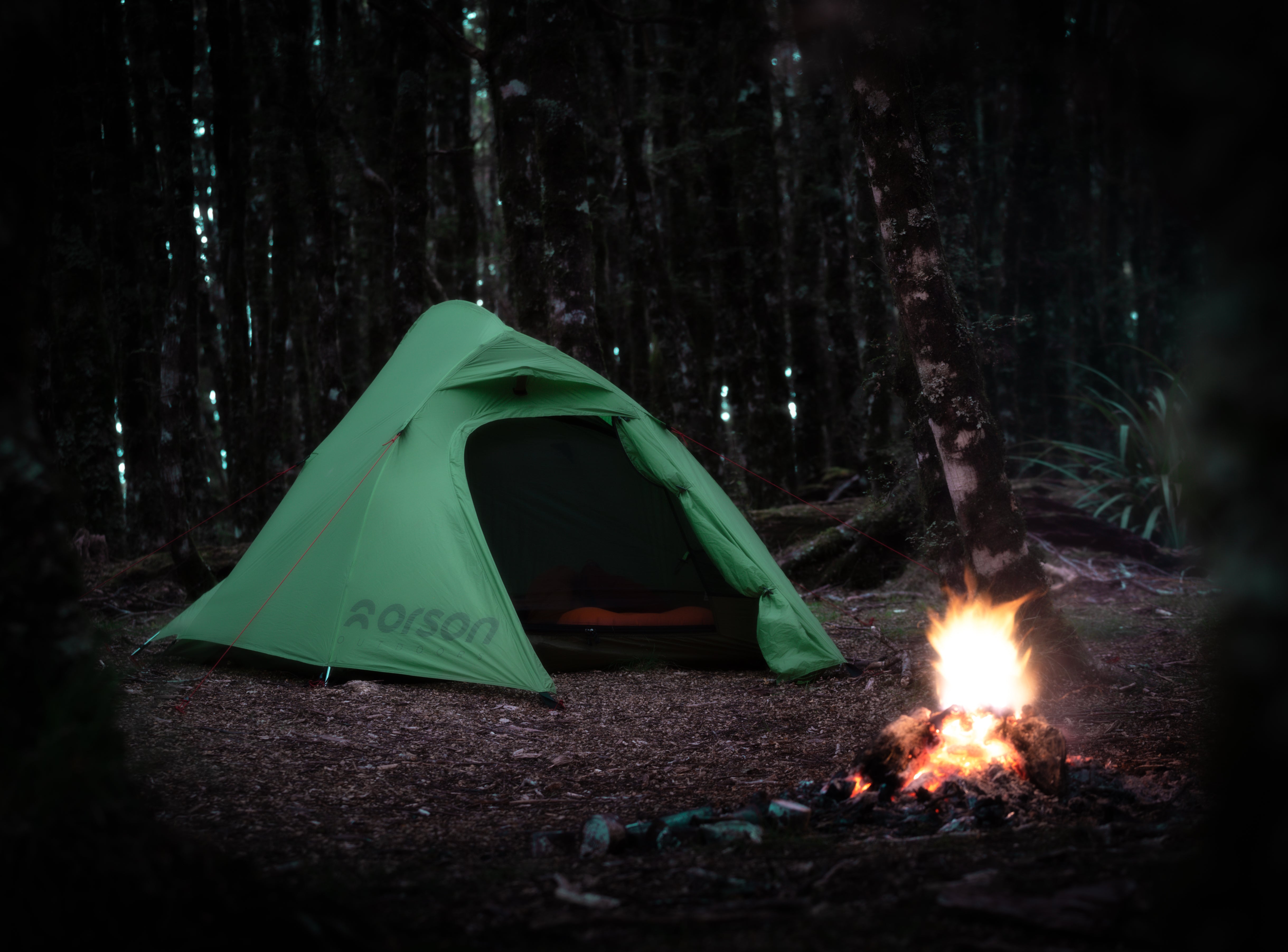
Camping out in a tent is another awesome option for backpackers and is a fantastic way to cut costs and enjoy the great outdoors. The time of year might determine how long you spend out camping but with the stunning nature on hand, it is a must to try out at some stage of your trip even if only a few nights. Tents can be used at Department of Conservation (DOC) campsites with facilities ranging from very basic to fully serviced, private holiday campsites which offer fully serviced sites and amenities and many hostels also offer sites for tents as well. Then there’s the opportunity to sleep out under the stars on many of the great walks and tracks New Zealand has to offer as well. Note that freedom camping is now strictly controlled and only available for self-contained camper vehicles only in restricted areas.
Purchasing a Tent at a Tent Sale
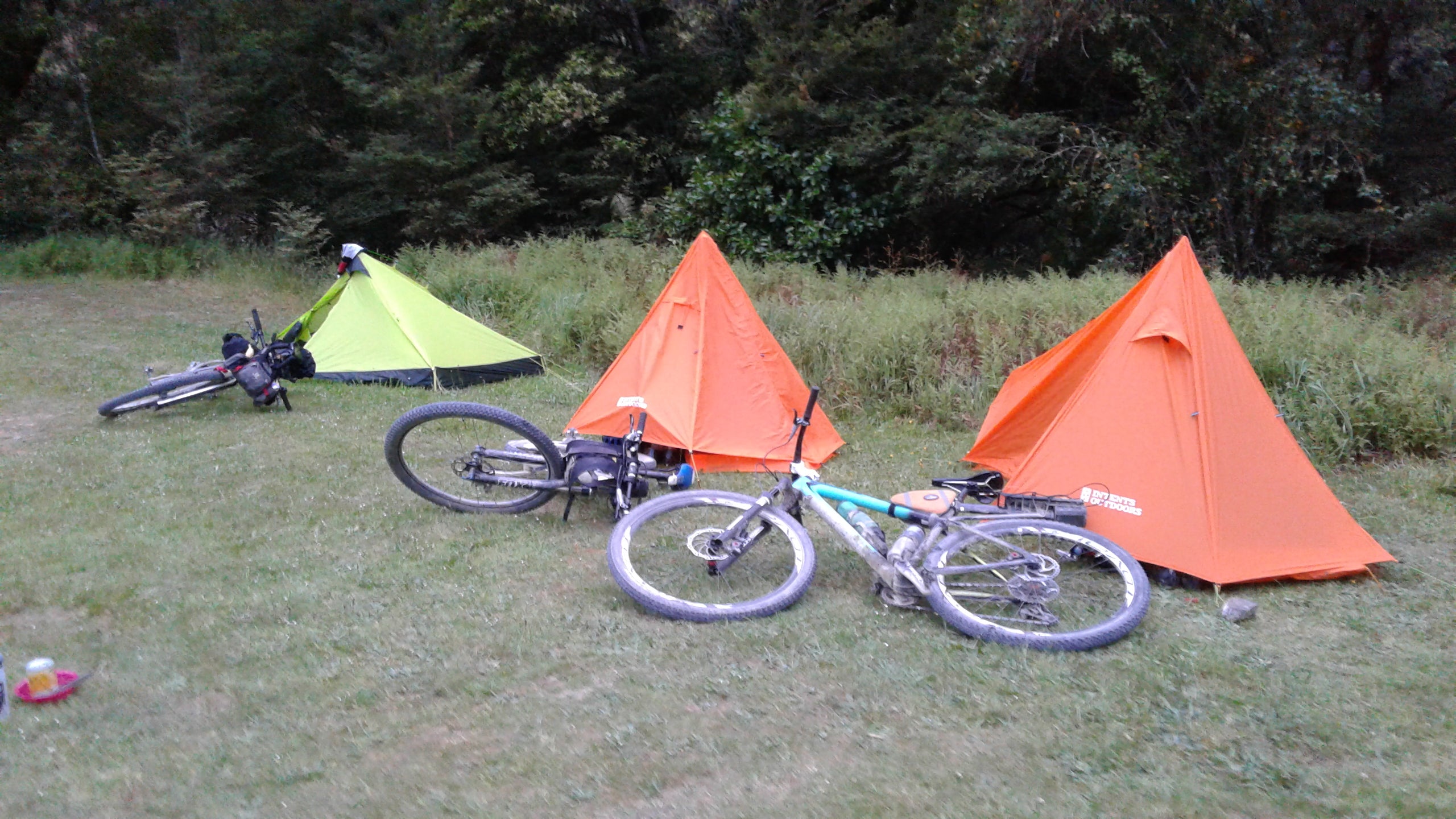
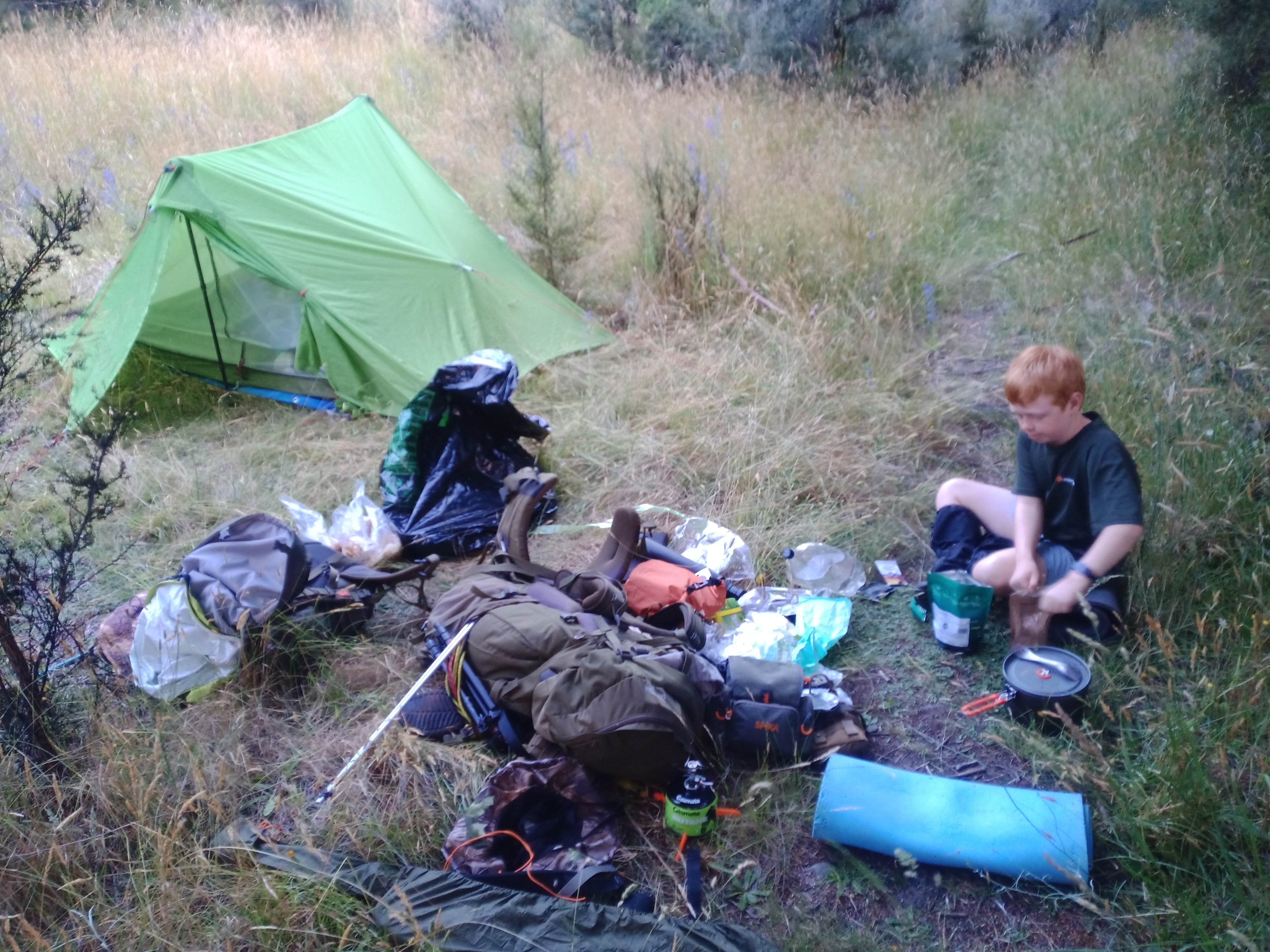
If bringing a tent, hiking boots and camping gear into New Zealand you must declare them on entry and make sure that they are clean and free from dirt, grass and insects to protect the local flora and fauna. Another option is to purchase a tent suitable for local conditions at a tent sale in New Zealand where you’ll be able to get advice on what type of tent will suit the season and your specific needs. Ultralight tents are great for summer hikers, backpackers and cyclists, are light, compact and pack away easily for use whenever you might need a tent. In winter a more robust tent will be needed to handle the rain, wind and snow that you may encounter.
Something to keep in mind if you are after maximum convenience is the option to purchase a tent and camping gear online in New Zealand and then have it sent to your hostel or accommodation for you to collect when you arrive. Online retailers with local knowledge will be able to answer any questions you might have and help you make the right choice for your backpacking trip. This will help you keep your baggage down and avoid some hassle at the airport.
Tents for Backpackers from Intents Outdoors
Intents Outdoors specializes in camping tents and has been selling camping tents and gear online in New Zealand since 2010. We have a range of quality tents suitable for backpackers and outdoors enthusiasts that meet the needs of the local New Zealand conditions and, as we import and sell directly to the public, at reasonable prices. We are more than happy to help with any questions you might have about camping tents, arranging viewing of tents on arrival in Auckland or having a tent sent to your place of stay to coincide with your arrival to start your New Zealand backpacking adventure of on the right foot.
Source: 15 Tips for Your First Experience Backpacking in NZ, BackpackingMatt.comCamping Near the Waters: A Quick Guide on Picking Outdoor Gear at a Tent Sale
New Zealand’s geography is characterised by breathtaking mountain ranges, scenic views and miles of coastline with clear, blue waters and sandy beaches. The country is basically a dream come true for locals and tourists who love the outdoors. If you’re an avid camper, staying overnight near the water is not something you should pass up.
To help you prepare, here are some handy tips on picking camping gear you should pack and some information on what you can expect.
Beachside and Seaside Camping
Camping is a staple part of the Kiwi lifestyle, and you’d be hard pressed to find a local who hasn’t spent a night in the outdoors either in a tent or a motorhome. If you fancy setting up camp near the coastline, a lake or a river, you will be spoilt for choice when it comes to locations.
There are many Holiday Parks that are located conveniently near beaches like the Wagener Holiday Park in Northland, the Pohara Beach Holiday Park at Golden Bay, and the Riverside Holiday Park in Mangawhai. These are perfect spots for people who want a laidback camping experience since campgrounds often provide basic facilities like kitchens, flush toilets and showers. Campers have to pay a fixed fee and are expected to clean their camp areas before leaving.
Other excellent campgrounds you should try visiting are the Kaueranga Valley in Coromandel, the Makarora Wilderness Resort in Southern Lakes, the Waipatiki Beach Farm Park along the Hawkes Bay and the Kai Iwi Lakes in Northland.
Watersports and Water Activities
Surrounded by different bodies of water, New Zealand is known far and wide as a watersports mecca. The pristine beaches will make you want to kick back and enjoy the sun as soon as you get there, but be sure to try your hand at some of the more exciting activities the water has to offer like kayaking, fishing, surfing, stand up paddle boarding, windsurfing and kitesurfing.
Sailing and going on a boat cruise are great opportunities to see the beautiful sights and learn about the native wildlife. The country has diverse marine life from various species of fish and shellfish to seals and penguins. New Zealand is also home to the world’s rarest dolphin, Hector’s dolphin and has 34 marine reserves dedicated to preserving underwater wonderlands. Check out diving or snorkeling possibilities if you want to take a closer look.
Waterproof Tents and Gear
If you’re planning to camp as close as you can to the water, you’re going to need some quality waterproof camping gear. Here are some tips you need to keep in mind the next time you head to a tent sale in NZ.
As a rule of thumb, choose your tent based on where you plan to camp. In this case, you’re going to need a tent that can withstand the hot summer sun, a bit of rain and probably some strong sea breezes. One of the first things you might hear mentioned when looking at tents is the season rating. Most tents fall into the three season category, good for use in spring, summer and autumn seasons and suitable for camping at the beach. Four season tents are for use year round and are built to stand up to harsh winter weather as well. Check that the tent design is suitable for your needs and can hold up in winds, has enough room for you and your family and all the gear and toys you’re taking to the beach. You should also look into the waterproof rating of the tent you choose and make sure it will handle showers. A tarp and paracord are a handy addition to provide shelter from the sun or if needed helps ward off rain, the cold and condensation when placed over a tent.
For the rest of your camping gear requirements, there is a huge range of handy supplies available from clothing and sleeping bags to backpacks and multi-tools. It’s good practice to pack water-resistant gear wherever you go anyway, so these are well worth your investment. For assistance in choosing the right tent and camping gear for you and your next trip Intents Outdoors will be more than happy to help. Simply email us at info@intentsoutdoors.co.nz with any questions you might have.
Sources:
Perfect Pitch: 10 Kiwi Classic Campsites, NZHerald.co.nz
Backpacking 101: Choosing Your Gear, OutsideOnline.com
Advice on Looking for Tents for Sale and NZ Ideal Camp Sites for Camping Rookies
With an abundance of scenic camping grounds scattered all throughout New Zealand, it’s no wonder both locals and tourists alike camp out all year round. Camping is such a huge part of the famous NZ cultural identity. In fact, according to Tourism New Zealand’s chief executive, backpackers and campers contribute greatly to the country’s economy. This is why the government is going to great lengths to preserve and protect designated campsites and even those in the more remote locations through the Department of Conservation. By extension, this agency is also tasked to care for the beautiful indigenous plants, unique and endangered animal species as well as sites of historical significance.
If you are set on going outdoors, you will need to have a quality camping tent and local knowledge.
Popular Campgrounds
Backpackers and budget campers will definitely want to take advantage of the many free-of-charge areas where “freedom camping” is permitted. But you need to be on the lookout for camping restriction signs and learn more about “freedom camping” rules if you don’t want to incur an infringement fee. For instance, some sites don’t allow camping unless you’re in a certified self-contained vehicle and a have proper means to dispose of your waste. Before you head out, make sure to look up regulations for specific locations.
Lake Karapiro is one of the most popular destinations for campers who want to try out watersports as it’s well known as a world-class rowing venue. It’s a 21 km-long lake located downstream of the famed Waikato River in the North Island. Driving along the dam, built in 1947, will give you the best views of the lake. It’s also just a short distance from the Lord of the Rings Hobbiton Movie Set if you want to stop by there before or after to do a little sightseeing.
There’s also the Fiordland National Park in the South Island with its stunning landscape of jagged peaks, great lakes and fiords, famed walking tracks and lush forests. The spectacular scenery will take your breath away and you’ll know why the park has international World Heritage status.
You can also head to the plentiful private camp sites and holiday parks where amenities like toilets, showers and clean drinking water are provided. They’re found at popular spots throughout the country and even in the middle of the cities like the one at Auckland’s Takapuna Beach. They’ve got something for everyone, with cabins, sites for campervans and tent sites for car campers and backpackers.
Camping Tents
If you want to try out the full outdoor experience, you’ll want to forgo hotel or backpackers for a few days and look at finding tents for sale in NZ. But you cannot just grab the first tent you see on a shelf. Tents that hold up well against New Zealand’s diverse and changing weather conditions will serve you best. If you’re just starting out, a light weight, easy to set up polyester tent is a great first option, but be sure to take into account some considerations.
In New Zealand it’s not uncommon to experience ‘four seasons in one day’ and so your tent should provide adequate protection from the elements, with high enough waterproof ratings to keep out the rain and yet also have enough ventilation to allow airflow on hotter days. You’ll need to consider waterproof ratings, fly and floor fabrics, pole materials and tent designs when looking for a tent that is able to stand up to windy conditions that prevail throughout the country.
And you need to take into account the type of camping you want to do and finding a tent that will meet your needs and demands of your trip. Family campers and car campers might look for big tents with multiple rooms, size and comfort, easy set up and take down. Roof top tents are great for 4x4 enthusiasts and campers on a road trip, driving from one place to another while taking in the sights. On the other hand, the priority for trampers and hikers will be a tent that is compact and light in weight yet still perform well in tough conditions.
If you wish to find out more about tent and camping needs that are right for you and the conditions you’ll be facing or you’d like more info on places to go, email Len at info@intentsoutdoors.co.nz and he will be happy to assist you.
Sources:
Tips For Staying In Camping Grounds Around New Zealand, NewZealand.com
Staying at New Zealand Department of Conservation Campsites, MyNewZealandCamperVanTrip.com
Top tips for freedom camping in New Zealand, LonelyPlanet.com
Camping Equipment For NZ Tip #2 - Choosing A Canvas Tent, NewZealand.com
Facebook Promo Prize Winner!
Congratulations to Dave Jones, the winner of the $249 Nomad 3-4 Person Tent in our Facebook Promotion contest! His name was randomly drawn as winner from all those who liked, commented on, reviewed and/or shared our Intents Outdoors page!
Thanks to everyone who participated and helped make this contest a success!
Stay tuned for our next promo where we'll be running a photo contest over the summer!
How to choose a waterproof tent
It's late at night. You're lying in your tent and it's just started pouring down. ‘Umm, is this tent waterproof?’ Having a waterproof tent is essential but how do I know if a tent is waterproof?
There are some important things to know when choosing a tent and making sure it's waterproof ...
Tent fabric ratings - Most tents are made using polyester fabric which is not waterproof. So a PU (Polyurethane) coating(s) is applied to provide ‘waterproofness’. The hydrostatic head is a measurement of how waterproof the fabric is, and is measured in mm, usually ranging from 800mm up to 10,000mm. There’s no internationally recognised standard of what specific rating ‘waterproof’ is, but 1500mm is widely accepted as being the minimum to be deemed waterproof and able to handle most rain conditions. A tent with a 1500mm rated fly means a 1500mm high column of water can be held up against the fabric for one minute before a drop of water seeps through.
Generally, the higher the mm rating, the higher the ‘waterproofness’ of the tent. But depending on your needs and use you probably don’t require the highest mm ratings, as more coatings mean more unnecessary weight, higher costs and chemicals in the coating that can also weaken the fabric.
With nylon tents, silicone coatings are often used to improve the fabric’s waterproof properties and strength referred to as silnylon. Silicone coatings are very smooth and taped seams will not stick to them and so buyers may have to apply a seam sealant by hand. To get around this manufacturers may apply a silicone coating on the outside of the nylon fly and a PU coating on the inner side, allowing taped seams to be applied to seal the stitching.
Canvas fabric works in a different way to keep you dry and so mm ratings are much lower. Canvas is breathable and relies on the cotton swelling when wet to close the gaps between the threads and stop the fabric from leaking. Polycotton (a blend or canvas and polyester) and canvas tents need to be ‘seasoned’ first before use (repeated wetting and drying of the fabric). Canvas weave tightens up and becomes very waterproof and is highly regarded by a lot of campers.
Seams and stitching - Check where the tent material has been stitched together. A transparent ‘tape’ that has been applied using heat should cover all stitched seams and places where additional items like toggles or attachment points have been sewn into the fabric.
Floors and Groundsheets (and Footprints) - A tent floor needs to be hardy. We stand, sit, lie on it and push it into ground that may be damp or wet for long periods of time. Polyester and Nylon floors are often thicker and have higher mm ratings ranging from 1500mm to 10,000mm to meet the greater wear and tear. Floors can be also made of waterproof non breathable PE (polyethelene) and heavy duty PVC.
Bathtub floors are common, with sides that turn up at the edges minimising chances of water entering your tent. If tent floors have seams also check that they are sealed.
The use of footprints with tents is debated. Some argue that the added protection of another layer between the ground and your tent floor will reduce moisture rising from below and also protect you tent floor form rough surfaces. On the other hand others say they are unnecessary, add extra weight and in rain will collect water and pool it directly under your tent floor.
Zips - Zips are a potential place for rain to come in. Make sure they are protected from the rain with flaps to keep water way. Power cable entry zips should also be protected from the rain.
Door and windows - The design of some tents makes it easier to enter and exit without rain falling directly into the tent as soon as you open the door. Make sure that tent doors and windows have proper coverage and flaps to prevent possible leakage.
Storm flaps and skirts - Some tents have fabric flaps or skirts that extend from the side of the tent out and away from the groundsheet which helps direct water away from the tent.
I personally would probably only look at a tent that has taped seams, is of a good design and has at least a 2000mm fly and 3000mm floor. But hiking tents, tramping tents, family tents, ultralight tents, and casual camping tents all have different purposes, priorities and requirements. If you need any help working out what waterproof tent is right for you then just ask us here and we’ll be happy to answer any questions you might have.
New silnylon tents, canvas tents, roof top tents and inflatable tents on the way.
Our next shipment of tents will be arriving early November with some great new products for campers including the following …
- Lightweight silnylon and polyester hiking tents
- Single and double canvas swags using convenient inflatable air poles
- Family tents using inflatable air poles for really quick and easy set up
- Roof top tents and annexes for campers on the move
We will be posting product photos and info in the next week. If you have any inquiries then just let us know.
Tent Designs, Styles and Types
So you’re off camping! There are so many different tent styles, tent types and tent designs to choose from. All cater to different people with different purposes and each has their pros and cons. Think about your needs when searching for the right tent for your next trip. And like many people these days, you’ll probably end up with more than one tent. Have a look at the following to see what tents are available these days.
Freestanding tents – tents that can stand on their own without having to be staked down. Easily picked up and moved to desired pitching positions without having to reassemble and useful if camping on hard flat surfaces like wooden platforms.
Backpacking tents – Tents light in weight and compact in packed size, ideal for backpackers, hikers and trampers.
Instant or Auto up tents – As the name suggests these are instant tents have a pole system based on a simple spring elbow joints, convenient but sometimes having problems with overall strength. The tent framework is permanently fitted to the fabric and putting the tent up requires letting the poles fall into the right position and making sure the poles are straightened at the elbow joints to allow the tent hold shape. Flexible poles are ‘bent’ to allow them to collapse and fold to pack away.
Family tents – There are always new tent designs, some simple and some more complex, aimed at keeping the whole family happy. Bigger is not always better as not all designs work as well on a larger scale and some may be unstable in winds. Most manufacturers produce tents that are made up of a combination of styles and these often work well.
Ultralight tents – As the name suggests refers to tents that are very light in weight, typically less than 1.5kg. They come in a variety of styles, single and double walls, with or without poles (using trekking poles or what nature has on hand). For the minimalist on the move.
A frame tents – The old pup-style tent with walls forming an ‘A’ shape.
Cabin tents – tents with almost vertical walls, maximizing the amount of interior space. Usually larger, freestanding car camping family style tents. They often use steel pole structures and canvas, provide good space and stability but are bulkier and require more time to set up and pack away.
Dome tents – Dome tents have flexible poles which cross over the middle of the tent and have ends that are secured to webbing straps at the corners giving them a dome shape. In windy conditions, they are sturdy and reliable but generally the bigger the tent the less stable they are. They have good interior space, can deal with challenging weather conditions, including snow and are a very popular design.
Pop-up, 2 second, quick pitch tents – Tents that ‘pop up’. They are very easy to set up and great for people who don’t want to deal with the troubles of setting up a tent. The ‘poles’ are already fitted into the tent fabric and once the coiled frame is released they pop up and take shape by themselves. Popular with festival goers, car campers and kids as they are so easy to pitch. Folding and packing away a pop up tent can be a bit trickier but once you have the hang of it is also quick.
Inflatable tents – These are becoming more popular for their convenience and very easy pitching, requiring pumping up of air poles and pegging down. They have inflatable beams that folds for easy storage and transport. These tents tend to be higher-priced than standard tents because the materials used are much stronger to ensure reliability and durability.
Single skin/wall/layer tents – A tent with only one wall, that doesn’t have a separate rain fly. Mainly found in ultralight tents, where solid fabric overhangs mesh, providing rain protection with superior ventilation to prevent internal condensation. Single wall A single-wall tent uses only one layer of waterproof fabric, which makes them lighter and often easier to set up. However, condensation can be a problem, so look for vents or a hybrid design that uses a partial rainfly, often over the front door to help reduce condensation.
Double skin, Double wall, Double layer tents – tents that have an inner and a separate rain fly (outer fly), with a wide air gap between them. Designed so that internal condensation can pass through the mesh or walls of the inner tent and collect on the underside of the outer/rain fly instead which keeps everything and everyone inside dry.
Single hoop tents – A lightweight design using just one curved pole usually only big enough for 1-2 people.
Geodesic tents, Semi-Geodesic tents – Geodesic is used to describe a tent that has criss-crossing poles that forms triangles. This triangular structure means that geodesic tents have much more stability in extreme weather conditions such as on mountains or windy, exposed areas. Semi geodesic tents work on the same triangular structure but typically use fewer poles.
Tunnel tents – Tunnel tents use a series of parallel arches or hoops that provide a good combination of weight and weather resistance. But they are not freestanding and must be staked out for them to take shape and stay up.
Tarp tents – A tarp is one solid nylon or polyester sheet that can be secured to trees, rocks or trekking poles, and used instead of a tent. Ultralight hikers prefer tarp tents or setups because they are lightweight and compact compared to other backpacking shelters.
3 Season tents – Most tents fall into this category and while there’s no standard definition, refers to tents suitable for use in spring, summer and autumn that tend to have more mesh ventilation panels and are lighter in weight than 4 season tents.
3-4 Season tents – As the name suggests these are something between the 3 season and 4 season tents. They’re made to handle summer trips but also early spring and late autumn, too. They have more in the way of strength (often with more poles) and balance ventilation and keeping warmth inside when needed (less mesh). They’re good for windy, high elevations and offer more protection against the elements.
4 Season tents (Alpine tents)– There’s no strict definition of what a 4 season tent is, but they are usually designed to perform well in colder winter conditions with heavier rain, snow and winds that can wreak havoc with lighter weight tent poles and fabrics. Most 4 season tents will have more poles to improve stability and have solid fabric door and inners instead of mesh to improve insulation.
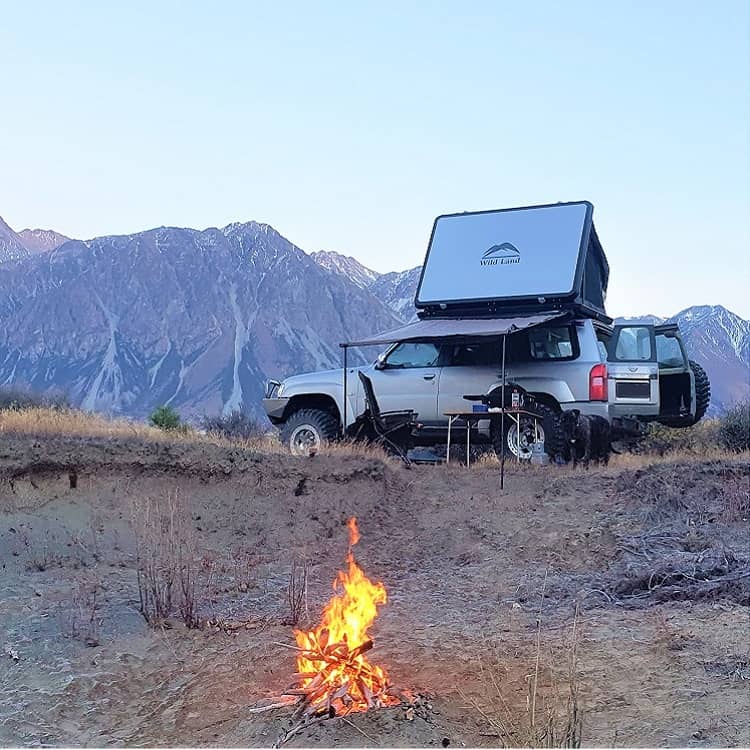
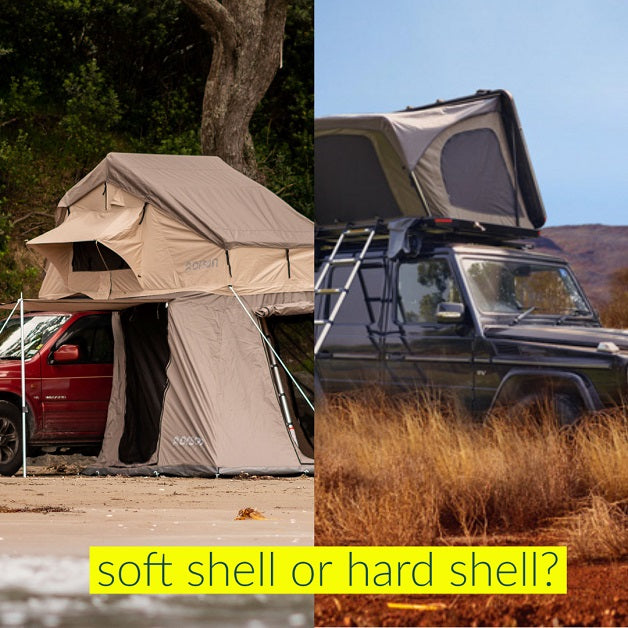
Roof top tents – Car-top tents essentially tents that pop-up, or fold out, from on top of a vehicle. Roof top tents (sometimes just RTT) are becoming more popular with their convenience and growing numbers of 4x4 adventure seekers. Secured to a roof rack system on the roof of a truck or car, they can be set up very quickly and easily by unfolding them and lowering a ladder. Roof top camping gives a great view, mean more time hiking or fishing and are great for those moving from place to place.
Vis a vis (face to face) – Popular tents for families that are rectangular with three distinct rooms. They have a large central part (living room) of the tent with good headroom, and one smaller room to each side for sleeping. These two rooms faced each other, hence the name.
Swags – In Australia, swags are popular, hardy, versatile 1-2 person tents used for camping or sleeping outdoors. A modern swag is a waterproof, insect proof canvas sleeping compartment that comes with a mattress and typically rolls up to pack away.
Trailer tents – A trailer tent is basically a tent in a trailer that pulls out and pegs to the ground, still using the trailer part for a bedroom area. Folding campers are trailers that unfold and where there is no canvas pegged directly to the ground (except if there is an additional awning used). Usually, bedroom areas will fold or slide out from the trailer unit, still off the ground when set up. New designs are coming out all the time.
Tipis, Teepees – Traditional style conical tents which have morphed into single pole tents based on the traditional tepee or old-fashioned Scout tents. Sometimes popular in glamping and for children but also some variations available in ultralight tents.
Yurt Tents – Traditional Mongolian style tents popular in glamping.
Bell Tents – Big Glamping conical style tents with walls more for comfort than convenience.
And there's probably more as well!
How to choose a tent
What kind of tent is right for me?
When choosing a tent think about what you’ll be using it for. It might be for anything from minimalist ultralight hiking through to a family camping set up with the kitchen sink. Of course budget and style are important but there are other things to consider when making your decision.
Size – Choose a tent that is a suitable size and has enough space for what you need. Tents have a capacity rating but these are often ‘snug’ tight fits – there’s no industry standard and you may find anything from 50cm to 70cm width per person. Think about what you need and like … make sure you have enough room for your friends, your gear, and even tossing and turning in the night. Consider the height of the inner – will you be standing or is crawling in on hands and knees ok? Another consideration is length of the tent … is it long enough so that when you lie down your head and feet won’t be touching the tent walls, remember that walls often come in at a sharp angle so the floor space might not give you as much space as you think.
Seasons – What kind of weather conditions will you usually be camping in? You’ll need a tent that can comfortably face the challenges nature throws at us. Tents are usually categorised as 3 or 4 season tents.
3 season tents – most tents would fit into this category – suitable for spring, summer and autumn camping. They usually have lots of mesh ventilation to help with airflow but keep the bugs out. They’re made to handle rain but are not built for extreme conditions like storms, heavy winds or snow.
3-4 season tents – made to handle summer trips but also early spring and late autumn too. They have more in the way of strength (more poles) and balancing ventilation and keeping warmth inside when needed (less mesh). They’re good for windy, high elevations and offer more protection against the elements.
4 season tents – made to handle extreme wind and snow, often used on mountaineering trips. They can be used in any season but designed to stand firm in worst winter weather at higher altitudes. They often use more poles and heavier fabric, with round aerodynamic domes to perform well in high winds and prevent snow build up and offer less in the way of ventilation as keeping warm is the priority.
Water resistance – Most polyester tents are applied with a polyurethane coating and taped seams which prevents water from getting in and makes them waterproof.
Make sure the tent is able to handle rainy weather that you may encounter. Tent fabrics are given a mm rating which measures a column of water held up to the fabric (hydrostatic head). A 1500mm rate fabric is generally considered waterproof and means a 1500mm tall column of water can be held up against the fabric before water leaks through (that’s a lot of water). For floors a higher rating would be advisable as they sit on wet ground with the added pressure of you pushing down as well ... usually 3000mm and above should be ok.
Tent fly – Depending on climate and weather conditions where you are the tent fly may offer full cover of the inner useful for where it might rain even on a summer’s day (like NZ) or partial cover where rain is more predictable (USA).
Double layer or single layer – Tents usually have two layers … the inner and the fly. Inners are usually breathable polyester or mesh covered by the outer fly. It’s best to maintain a gap between the two layers to improve ventilation and minimize effects of condensation. Single layer tents are just the fly and more popular with hikers wanting a light weight shelter. Condensation build up in single layer tents may be a problem as any condensation inside the tent might be in direct contact with you, so it’s best to maintain good ventilation to prevent the build up of condensation.
Fabrics – There are different fabrics available that have their pros and cons. Polyester is commonly used for its good performance and affordability, Nylon for light weight and strength but is more expensive. Cuben fibre for even lighter weight and greater strength but high cost. Canvas is a blend of cotton and polyester good for more durable tents but is bulkier and heavier.
Poles – How many poles are there? Do they create greater strength or increase internal space? Fibreglass poles are commonly used but are heavy. Aluminium poles are becoming more common and provide a good balance of strength and lighter weight. Steel poles are often used with large family tents and canvas tents. Inflatable air poles are on the rise due to improvements in design and quick easy set up. Maybe a popup tent which makes setting up a breeze.
Setting up – most tents are pretty simple to set up these days but some are easier, quicker than others or require 2 or people such as family tents. They may be free standing or require stakes to help them stand. On some tents inners are set up first and then the fly is placed over the top while on other tents the fly is set up first then the inner is hooked up inside.
Ventilation – mesh is often used for tent inners, on doors and windows to keep out insects but ensure that there’s enough ventilation options to allow airflow to maintain comfort levels inside the tent.
Vestibules – the front or rear entrance storage areas covered by the fly. Consider how much space you need to store your gear.
Doors – think about how many entrances you require? What shape and design are they and do they allow easy opening and access. Doors on inners may be double layered with zip up fabric or mesh option.
Stakes and guy rope – are guy ropes and stakes included and of what quality and number.
Internal features – some things to consider are storage pockets, gear lofts, ceiling loops or hooks for lighting, power inlets, vents that can be opened or closed in bad weather.
Weight and packed size – How much does the tent weigh? Is it easily carried around when hiking or to and from the car? How small a tent packs down to may be important of you’re carrying over long distances.
Thinking about the above will help point you in the right direction in finding a tent that’s suitable for your needs or looking further into tents that fit a more specific type of camping.
New Tents and Trends on the way
We used to spend our holidays in the same spot for a couple of weeks every year but now it seems we're on the go, haven't got that much time and keen to move on before setting up camp again, visiting friends and seeing the sights. As our camping habits are changing there's no surprise that tents are changing as well to fit in with our more mobile, busier lifestyles.
I recently returned from a trip to Sydney's Outdoor Retailer Australia trade show and China to see several manufacturers to take a look at what new tents and camping gear is coming onto the market. Some interesting trends are headed our way with a large range of roof top tents, vehicle awnings and canvas swags, a range of tents using inflatable air poles to simplify setting up and a big number of products related to ultralight camping including tents, hammocks and tarps, air pads and so on.
No surprises that the humble tent hasn't been reinvented but that new technology is changing what they're made of ... cuben fibre, silnylon, cotton polyester blended canvas, titanium, aluminium alloys are improving performance while reducing weight and volume. Camping is alive and well and popularity seems to be greater than ever! The upshoot of all this means we now have a huge choice of tents to choose from that specialize in every aspect of camping. There's a tent for every purpose these days.
And so this year I'll be stocking more international brands and also directly importing a new range of gear and tents especially ...
- light weight, low volume ultralight and hikers tents
- tarps and lightweight poles
- inflatable air pole tents, family and canvas tents
- event shelters and screen houses
- roof top tents and vehicle awnings
Keep an eye out for our new products arriving this spring!