
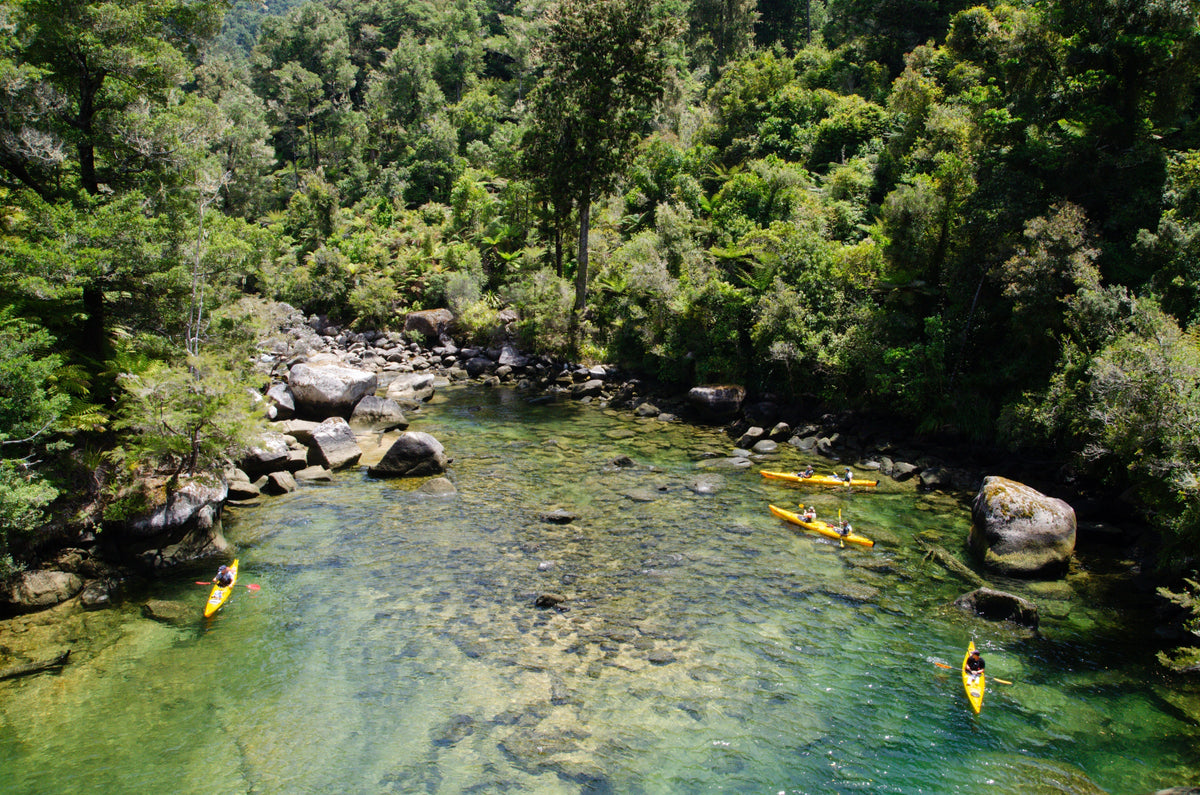
The Abel Tasman Coast Track is widely celebrated as New Zealand’s coastal jewel. Stretching 60 kilometres along the top of the South Island, this Great Walk blends golden granite beaches, turquoise estuaries, native forest headlands, and abundant marine life.
Whether you plan to tackle the full multi-day trek or combine walking with water taxis and sea kayaking, proper planning and gear selection are essential. Here is everything you need to know about what the journey entails, how to navigate tidal crossings, and the gear required to stay comfortable on the trail.


What to Expect on the Journey
The Abel Tasman Coast Track is typically walked over 3 to 5 days, running between Mārahau in the south and Wainui in the north. It is rated as an easy-to-intermediate track with mild elevations, making it accessible to a wide range of trampers while still offering a rewarding multi-day challenge.

Day-by-Day Track Breakdown
-
Day 1: Mārahau to Anchorage (12.4 km | 4 hours)
Crossing the open causeway at Mārahau, the trail winds through coastal forest and kānuka trees before descending into Anchorage Bay. Enjoy expansive lookouts across Tasman Bay along the way.
-
Day 2: Anchorage to Bark Bay (8.4 km low tide / 11.5 km high tide | 3–4 hours)
Shortly after leaving Anchorage, you reach Torrent Bay. At low tide, you can trek across the estuary shortcut. Otherwise, take the high-tide track around the inlet. Highlights include a short side trip to Cleopatra’s Pool (a natural rock waterslide) and crossing the 47-metre Falls River suspension bridge.
-
Day 3: Bark Bay to Awaroa (13.5 km | 4.5 hours)
Climb through mānuka forest before dropping back down to Tonga Quarry and Onetahuti Bay. Here, a boardwalk crosses the wetlands before you climb over Tonga Saddle and descend into Awaroa.
-
Day 4: Awaroa to Whariwharangi Bay (13 km or 16.9 km with tidal detour | 5.5 hours)
This section features the track's compulsory tidal crossing at Awaroa Inlet. After crossing, the trail travels through regenerating bush and coastal lookouts to Whariwharangi Bay, home to a restored 19th-century homestead.
-
Day 5: Whariwharangi to Wainui (5.7 km | 2 hours) or Tōtaranui via Gibbs Hill (9 km | 3 hours)
The final leg takes you over a low saddle down to Wainui Inlet, or up over Gibbs Hill for panoramic coastal views ending at Tōtaranui.
Navigating Tides & Water Taxi Logistics
Tidal management is one of the most unique aspects of the Abel Tasman Coast Track.
-
The Awaroa Inlet Crossing: This crossing cannot be bypassed. Awaroa Inlet can only be safely crossed within 1.5 hours before and 2 hours after low tide. Failing to time this correctly means waiting hours for the tide to recede.
-
Torrent Bay & Bark Bay Estuaries: Both have low-tide shortcuts that save time, but all-tide alternative tracks are available if you arrive at high tide.
-
Water Taxis: Water taxis operate regularly between Mārahau/Kaiteriteri and key points along the park (Anchorage, Bark Bay, Awaroa, and Tōtaranui). They allow flexible itineraries, multi-modal trip planning (combining hiking and sea kayaking), and pack transfers if you want to walk with a lighter daypack.


Accommodation: Great Walk Huts vs. Tent Camping
A common question when planning this Great Walk is whether you can camp in tents or if you must stay in huts. The answer is you can do either! The Department of Conservation (DOC) maintains both options along the trail, but they must be booked in advance year-round.
| Feature | Great Walk Huts (4 Sites) | Beach Campsites (19 Sites) |
|---|---|---|
| Locations | Anchorage, Bark Bay, Awaroa, Whariwharangi. | Dotted along golden beaches (Apple Tree Bay, Anchorage, Bark Bay, Onetahuti, etc.). |
| Facilities | Bunks, mattresses, running water, flush toilets, heating. | Designated tent sites, water supply (boil/treat), basic toilets, picnic tables. |
| Cooking | No gas cookers provided. Bring your own stove. | Covered cooking shelters at major sites; bring your own stove. |
| Vibe | Social, sheltered, communal indoor spaces. | Idyllic coastal camping right near the water. |
Note: Wild camping outside of designated DOC campsites is strictly prohibited within the National Park, and campers are not permitted to use indoor hut facilities.

Essential Gear Guide for the Abel Tasman
Having lightweight, reliable, and weather-appropriate gear makes all the difference on a coastal Great Walk. Below is a breakdown of what to pack, featuring high-performance options from Intents Outdoors.
1. Shelters & Tents (For Campers & Ultralight Trekkers)
When camping along sandy estuaries and breezy headlands, you need a shelter that balances low packed weight with stability and waterproofing.
-
Intents Outdoors Ranger 1: A lightweight (1.43kg), single-person tunnel tent designed for straightforward pitches. Its double-wall construction manages coastal condensation smoothly while keeping your packed weight minimal.
-
Intents Outdoors Ranger 2: An accessible, robust 2-person tent weighing 2.03kg. It offers dependable 3-season waterproof performance and plenty of space for pairs hiking the coastal trail.
-
Orson Hopper Pro 2: A premium silnylon option (2.2kg) engineered for fast setups. It features dual doors and dual vestibules, giving two campers individual entry and ample covered gear storage for wet boots and large packs.
-
Orson Phantom Bivvy (Ultralight Choice): For minimalist fast-and-light hikers, this ultra-compact shelter weighs just 680g. Featuring integrated tie-out points to hold the mesh away from your face, it offers shelter for minimalist overnighters or acts as a lightweight emergency backup.

2. Backpacks & Carrying Systems
A multi-day tramping pack between 48L and 65L is recommended if carrying full sleeping and cooking gear.
-
Rab Backpacks: The Rab Hyperon 65L and Rab Exion 38 provide tough, weather-resistant materials and ergonomic harness systems built to balance multi-day loads comfortably.
-
Osprey Backpacks: For specialized fit and ventilation, explore options like the Osprey Aether 65 / Ariel 65 or the highly ventilated Osprey Atmos AG 65.
3. Sleep Systems
Coastal sea breezes can bring cool night air, even during summer. A compact sleeping bag paired with an insulated mat ensures warm, restful sleep.
-
Rab Synthetic Sleeping Bags: The Rab Radeon Synthetic Sleeping Bag and Rab Women's Radeon Synthetic Sleeping Bag are hardwearing, warm and dependable. Filled with synthetic Stratus™ insulation, they're fast drying and cope with condensation and wet conditions in mild climates.
-
Sleeping Pads: Pair your bag with an Orson Kea Ultralight Sleeping Mat or Klymit Insulated Static V Lite sleeping pad. Their V-chamber design supports body alignment and insulates against damp coastal ground.

4. Camp Kitchen & Stoves
Unlike some other Great Walk huts, DOC huts on the Abel Tasman Coast Track do NOT supply gas cookers. Trampers in both huts and campsites must carry their own cooking equipment.
-
Soto Camping Stoves: The Soto Amicus (75g) and Soto Windmaster (87g) feature recessed burner heads that excel in breezy coastal environments, offering fast boil times and fine flame control.
-
Optimus Cook Systems: The Optimus Crux Lite Solo Cook System pairs a folding stove with a hard-anodized non-stick pot set, providing a lightweight, all-in-one kitchen solution.
5. Clothing, Outerwear & Tidal Footwear
Marine weather systems can shift quickly from sunshine to southerly winds.
-
Waterproof Outerwear: Carry a quality waterproof jacket—such as a breathable Rab Pertex or Gore-Tex shell—to block rain and sea winds. Waterproof rain pants are also recommended for colder or wetter months.
-
Technical Layering: Synthetic or merino base layers wick sweat during humid climbs, while lightweight fleece mid-layers maintain warmth around camp. Avoid cotton.
-
Tidal Footwear: Bring a pair of light water sandals, neoprene booties, or quick-drying shorts for wading through Awaroa Inlet and Torrent Bay. Walking across wet mudflats in tramping boots is not recommended.
6. Essential Trail Accessories
-
Dry Sacks & Pack Liners: Protect sleeping gear and electronics from rain or water taxi transfers with durable dry bags.
-
Insect Repellent: Sandflies can be active around coastal estuaries and beach camps.
-
Headlamp & First Aid: Pack a reliable torch, basic first aid, and patch kits for field repairs.


Practical Tips for Your Trip
-
Calculate Tide Times First: Before booking your huts or campsites, check the DOC tide timetable for the Awaroa Inlet crossing. Build your daily hiking distances around low tide at Awaroa.
-
Secure Your Food: Native Weka birds are infamous along the Abel Tasman for raiding unzipped pack pockets and tents. Keep food inside sealed bags or stored securely inside hut facilities or heavy-duty dry bags.
-
Treat Water: While water is available at huts and major campsites, DOC advises treating or boiling surface water sources before drinking. Lifestraw have a great range of options to assist with this.
-
Leave No Trace: Carry out all rubbish and help preserve the national park’s native ecosystems.
Gear up for your Abel Tasman adventure with field-tested tents and shelters from Intents Outdoors and Orson, alongside technical gear from trusted brands like Rab, Osprey, Soto, and Klymit. Explore the full range online at intentsoutdoors.co.nz.
